Affiliate marketing has become far more competitive in 2026, and ranking content now requires more than basic keyword stuffing or random backlink tactics. Search engines prioritize topical authority, user experience, search intent, and content quality, which means marketers rely heavily on SEO tools to stay ahead.
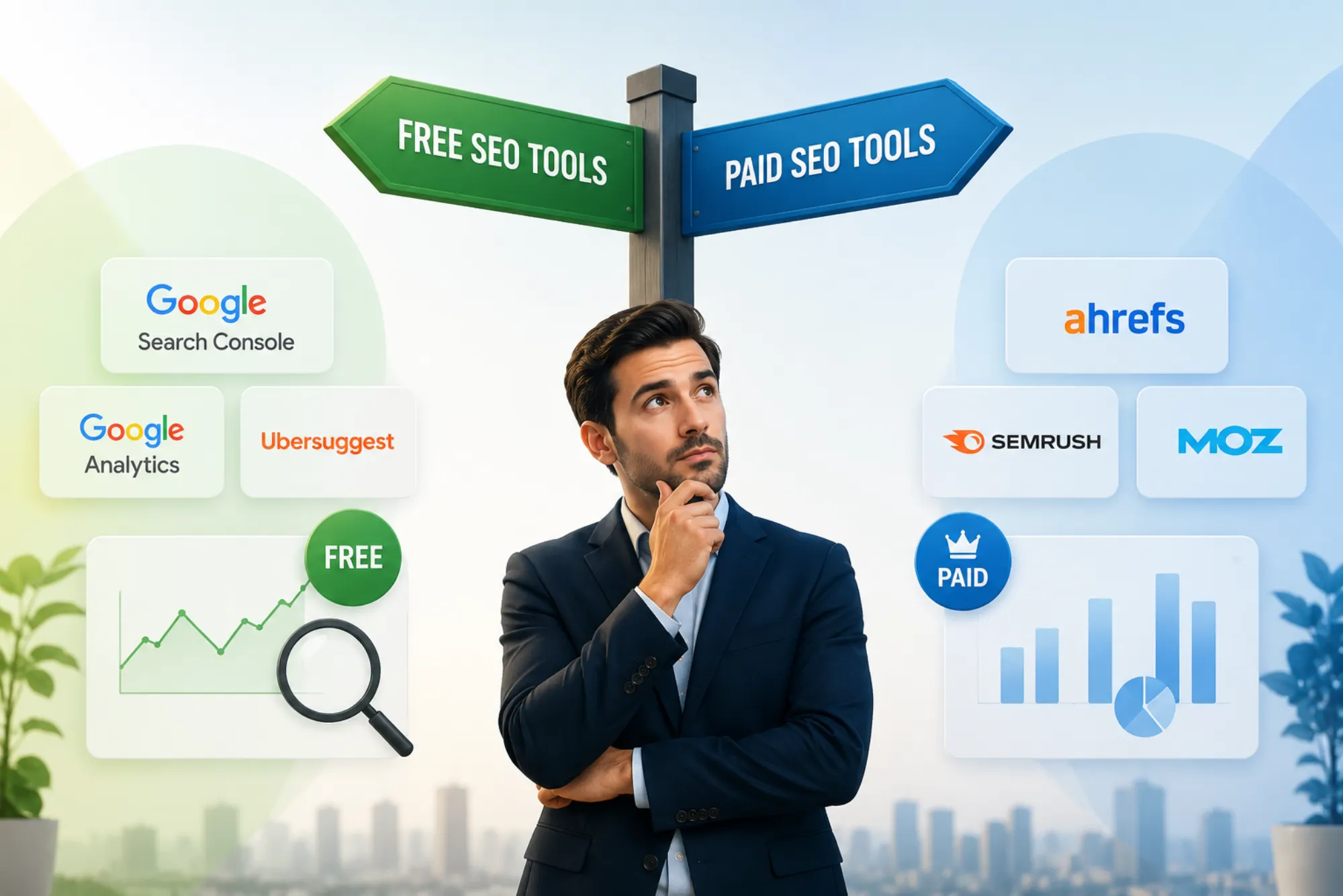
The debate around free vs paid SEO tools is no longer about whether premium platforms are “better.” The real question is whether the additional cost produces enough measurable value for affiliate marketers trying to grow traffic and commissions sustainably.
For beginners, free tools may offer enough functionality to build early momentum. For established affiliates managing multiple sites, paid SEO platforms often become operational necessities rather than optional upgrades.
This guide breaks down the strengths, limitations, costs, and real-world use cases of both options so affiliate marketers can make smarter decisions based on their goals, budgets, and growth stage.
Search Intent Behind This Topic
The search intent behind “free vs paid SEO tools” is primarily commercial investigation with a strong informational angle. Readers want to compare available options before deciding whether investing in premium SEO software makes financial sense for affiliate marketing.
Why SEO Tools Matter More for Affiliate Marketing in 2026
Organic search remains one of the highest-converting traffic sources for affiliate marketers. However, ranking competitive keywords now requires deeper analysis of:

- Search intent alignment
- Content gaps
- Competitor strategies
- Internal linking structures
- Topical authority
- Technical SEO performance
- User engagement signals
Without reliable SEO data, affiliate marketers often waste time targeting unrealistic keywords or publishing content that never gains visibility.
Even content-focused publishers in broader digital niches, such as the insights shared on technology-focused online platforms, increasingly depend on SEO tools to understand audience behavior and content performance trends.
What Free SEO Tools Usually Offer
Free SEO tools have improved significantly over the last few years. Many now provide enough functionality for smaller affiliate projects, especially during the early stages of website growth.
Common Features in Free SEO Tools
| Feature | Typically Available in Free Tools | Limitations |
|---|---|---|
| Keyword Research | Basic keyword suggestions | Limited search volume data |
| Site Audits | Basic technical checks | Restricted crawl depth |
| Backlink Analysis | Partial backlink visibility | Small databases |
| Rank Tracking | Limited keyword monitoring | Daily limits |
| Content Optimization | Basic readability checks | Minimal SERP analysis |
| Analytics | Traffic overview | Reduced segmentation |
Google Search Console and Google Analytics still remain among the most valuable free resources available for affiliate marketers.
Advantages of Free SEO Tools
Free platforms work especially well for:
- New affiliate websites
- Low-budget niche projects
- SEO beginners learning fundamentals
- Small content teams
- Testing keyword opportunities
A new affiliate marketer publishing informational content may not need enterprise-level software immediately. In many cases, free keyword tools combined with manual SERP analysis can still uncover profitable low-competition opportunities.
Where Free Tools Fall Short
The biggest limitation is data depth. Free tools often provide estimates rather than complete datasets, making it difficult to evaluate competition accurately.
Affiliate marketers operating in competitive niches such as finance, software, travel, or consumer technology usually need more advanced insights than free tools can provide.
For example, understanding backlink velocity, keyword cannibalization, historical ranking shifts, and competitor content strategies often requires premium software.
What Paid SEO Tools Bring to the Table
Paid SEO tools are designed for scalability, automation, and strategic analysis. They help affiliate marketers reduce guesswork and make faster data-driven decisions.
Core Features of Paid SEO Platforms
| SEO Capability | Paid Tools Advantage |
|---|---|
| Keyword Research | Accurate search volume, keyword intent, SERP difficulty |
| Competitor Analysis | Traffic estimates, ranking pages, backlink insights |
| Backlink Tracking | Large live databases with link quality analysis |
| Technical SEO | Advanced crawling and issue detection |
| Content Optimization | Entity analysis, NLP recommendations, topical coverage |
| Automation | Scheduled reports and monitoring |
| SERP Tracking | Location-specific ranking updates |
Premium tools also save time, which becomes increasingly important as affiliate portfolios grow.
The Real Benefit: Decision-Making Speed
Experienced affiliate marketers rarely pay for SEO tools solely because of extra features. They pay because better data shortens the path to profitable decisions.
A paid platform can quickly identify:
- Keywords competitors are ranking for
- Pages losing traffic
- Backlink opportunities
- Content gaps in a niche
- Technical issues affecting rankings
- Emerging search trends
This level of insight becomes difficult to replicate manually using only free solutions.
Free vs Paid SEO Tools: Direct Comparison
| Factor | Free SEO Tools | Paid SEO Tools |
|---|---|---|
| Cost | No direct expense | Monthly or yearly subscription |
| Data Accuracy | Moderate | High |
| Keyword Depth | Limited | Comprehensive |
| Backlink Analysis | Basic | Advanced |
| Automation | Minimal | Extensive |
| Scalability | Suitable for small projects | Ideal for scaling affiliate sites |
| Learning Curve | Generally simpler | May require advanced SEO knowledge |
| Competitive Research | Limited visibility | Deep market intelligence |
Which Option Makes More Sense for Beginners?
For beginners entering affiliate marketing in 2026, free SEO tools usually make more financial sense initially.
Most new websites struggle with:
- Low authority
- Limited content
- Minimal backlinks
- Small traffic volumes
At this stage, investing heavily in expensive software may not generate proportional returns.
Instead, beginners should focus on:
- Learning search intent
- Creating high-quality content
- Improving on-page SEO
- Building topical relevance
- Publishing consistently
Many successful affiliate marketers began using free SEO stacks before upgrading to paid systems later.
When Paid SEO Tools Become Worth the Investment
Paid SEO tools become increasingly valuable once affiliate websites begin generating consistent revenue.
Several signs indicate it may be time to upgrade:
- Your site covers multiple content categories
- You publish content at scale
- You compete in high-authority niches
- You manage multiple affiliate websites
- You outsource content production
- You actively build backlinks
At this stage, operational efficiency matters as much as rankings.
Affiliate publishers expanding into broader editorial ecosystems similar to the content structure seen on multi-category publishing blogs often rely on advanced SEO platforms to maintain organization and improve search visibility across different content verticals.
The Hidden Cost of Relying Only on Free Tools
Free SEO tools may save money upfront, but they can create hidden long-term costs through inaccurate data or missed opportunities.
Common issues include:
- Targeting overly competitive keywords
- Publishing duplicate-topic content
- Missing technical SEO problems
- Ignoring profitable search trends
- Wasting time on low-value backlinks
Time itself becomes a major expense in affiliate marketing. A marketer spending dozens of extra hours manually validating SEO data may eventually lose more value than the cost of premium software.
Hybrid SEO Strategies Are Becoming More Common
Many affiliate marketers no longer choose strictly between free and paid SEO tools. Instead, they combine both approaches strategically.
A hybrid setup may include:
| Task | Tool Type Commonly Used |
|---|---|
| Performance Tracking | Free analytics platforms |
| Keyword Research | Paid SEO software |
| Technical Audits | Combination of free and paid tools |
| Content Optimization | Premium content analysis platforms |
| Trend Monitoring | Free trend analysis tools |
This blended approach often provides the best balance between affordability and performance.
How AI Is Changing SEO Tool Selection in 2026
Artificial intelligence has significantly reshaped SEO software over the last two years. Modern platforms now include:
- AI-assisted keyword clustering
- Search intent prediction
- Content scoring systems
- Automated SERP analysis
- Competitor pattern recognition
- Internal linking recommendations
However, AI-generated recommendations are only as useful as the underlying data quality. This is one area where premium tools still maintain a major advantage.
A growing number of marketers also study broader digital publishing trends from resources discussing online user behavior and web ecosystems, including articles similar to digital platform analysis content that explores evolving online engagement patterns.
Choosing SEO Tools Based on Affiliate Business Size
Small Affiliate Sites
Small websites targeting low-competition niches can often succeed with mostly free tools, especially during the first year.
Mid-Level Affiliate Businesses
Sites publishing frequent content across several categories usually benefit from at least one premium SEO platform.
Large Affiliate Operations
Established affiliate publishers managing teams, outreach campaigns, and content calendars generally require advanced paid systems for workflow management and data accuracy.
How to Evaluate Whether a Paid Tool Is Actually Worth It
Not every premium SEO platform delivers equal value. Before subscribing, affiliate marketers should evaluate:
- Keyword database size
- Data freshness
- Backlink accuracy
- Ease of reporting
- Technical audit depth
- Content optimization quality
- Integration capabilities
- Pricing scalability
Independent testing and practical use cases often reveal more than marketing claims. Reviewing industry case studies and professional SEO benchmarks from trusted research publications can also help guide purchasing decisions. [Insert relevant reference link here]
Common Mistakes Affiliate Marketers Make With SEO Tools
Even expensive SEO platforms cannot guarantee rankings. Many affiliate marketers misuse tools by focusing too heavily on metrics while ignoring actual user value.
Some common mistakes include:
- Obsessing over keyword volume only
- Ignoring search intent
- Publishing AI-heavy low-value content
- Relying solely on automated recommendations
- Over-analyzing instead of publishing consistently
SEO tools should support strategy, not replace critical thinking.
Websites covering broad digital and business topics, such as sections dedicated to finance and online business insights, often succeed because they balance optimization with practical reader-focused content.
Frequently Asked Questions
Are free SEO tools enough for affiliate marketing?
Free SEO tools can be enough for beginners and small affiliate sites targeting low-competition niches. However, scaling traffic in competitive markets usually requires deeper insights from paid platforms.
Do paid SEO tools guarantee higher rankings?
No. Paid tools improve decision-making and efficiency, but rankings still depend on content quality, backlinks, user experience, and search intent alignment.
What is the biggest advantage of paid SEO tools?
The biggest advantage is access to comprehensive and accurate SEO data that helps marketers identify profitable opportunities faster.
Can affiliate marketers combine free and paid SEO tools?
Yes. Many successful affiliate marketers use free analytics tools alongside premium keyword research or backlink analysis platforms.
Should beginners buy expensive SEO software immediately?
Most beginners benefit more from learning SEO fundamentals first. Investing in expensive software too early may not produce meaningful returns without a strong content strategy.
Conclusion
The free vs paid SEO tools debate ultimately depends on the stage and goals of an affiliate marketing business. Free tools remain valuable for learning, experimentation, and smaller websites, while paid platforms provide the depth, scalability, and efficiency required for serious growth.
In 2026, successful affiliate marketers are not necessarily the ones spending the most on software. They are the ones using SEO data intelligently, creating genuinely useful content, and adapting quickly to changing search behavior.
For many marketers, the smartest approach is neither completely free nor fully premium. A balanced combination of reliable free resources and carefully selected paid tools often delivers the strongest long-term return on investment.
Related Reading: Best All-in-One SEO Tools For Affiliate Marketers in 2026: What to Use and Why
Related Reading: What Makes Sobha South a Prime Choice for Homebuyers?