
You Want to Do Business Globally. Dubai Free Zones Were Built for Exactly That.
Every year, thousands of entrepreneurs from India and around the world choose to set up a company in a Dubai Free Zone.
In 2026, that interest remains strong.
Global competition continues to grow. At the same time, changing tax rules in home markets and the need for a credible international business presence are encouraging founders, consultants, freelancers, and investors to explore the Free Zone structure.
However, many people still do not know where to begin. They may know that Dubai can support international business, but they may not know which Free Zone suits their company or how to avoid unnecessary costs.
This guide makes the process easier to understand. Whether you are a startup founder in Bangalore, a trading company in Mumbai, or an investor in Delhi, you will gain a clear understanding of the Dubai Free Zone business setup in 2026.
For more Dubai-focused business and local information, you can also explore the DXB Core homepage.

What Is a Dubai Free Zone Company?
A Dubai Free Zone company is a legally registered business entity that operates within a designated UAE Free Zone. Each Free Zone has its own authority and rules. These economic zones aim to attract foreign investors and international businesses.
Business Setup in Dubai Free Zone gives entrepreneurs a structured business base for international activities. In addition, many Free Zones provide different licensing and workspace options.
The UAE has more than 40 Free Zones. Each zone focuses on specific industries, such as technology, media, trading, logistics, healthcare, and financial services.
Therefore, choosing a Free Zone should depend on your business activity, budget, office needs, and long-term plans.
Why Dubai Free Zones Are Popular with Indian Entrepreneurs in 2026
India remains an important market for businesses expanding into the UAE. As a result, many Indian entrepreneurs explore company formation in Dubai Free Zone for several reasons.
- 100% Foreign Ownership: Eligible foreign investors can own their Free Zone company without a local sponsor or Emirati partner in many cases.
- 0% Corporate and Personal Income Tax: Free Zone companies may qualify for 0% corporate tax on qualifying income when they meet the required conditions. Therefore, businesses should review the current UAE corporate tax rules before choosing a structure.
- Full Profit Repatriation: Free Zone structures can allow owners to transfer profits and capital outside the UAE, subject to applicable laws and banking requirements.
- Fast and Streamlined Setup: Some Free Zone companies can complete incorporation within a few business days when applicants submit complete documents and receive all required approvals.
- Credibility in Global Markets: A UAE-registered company can create an established international business presence when working with clients, banks, and partners in different countries.
- Visa Eligibility: Free Zone companies can provide eligibility for UAE residence visas for owners, partners, and employees, depending on the license, office package, and Free Zone requirements.
You can also explore the Dubai business category for more business-related information and guides.
Popular Dubai Free Zones and Their Industry Focus
Choosing a Free Zone is not a one-size-fits-all decision. Each zone may offer different costs, visa allowances, business activities, and licensing categories.
For example, the following Free Zones serve different business needs:
- DMCC (Dubai Multi Commodities Centre): DMCC is widely known for trading, commodities, consulting, fintech, and professional services. It also attracts international traders and B2B service providers.
- Dubai Internet City (DIC): Dubai Internet City focuses on technology, software, IT services, and digital media. Therefore, it can be relevant to companies that want to operate within an established technology ecosystem.
- IFZA (International Free Zone Authority): IFZA is known for flexible business setup options. As a result, startups, consultants, and SMEs often consider it when they want a UAE business presence.
- JAFZA (Jebel Ali Free Zone Authority): JAFZA suits trading, logistics, and manufacturing businesses that need access to Jebel Ali port and the wider supply chain network.
- Dubai South: Dubai South is positioned around Al Maktoum International Airport and Expo City. It can suit businesses involved in aviation, logistics, e-commerce, and related industries.
Use Case Real World Example: An IT consulting firm from Hyderabad sets up in Dubai Internet City. The company can invoice international clients through its UAE entity, apply for UAE residence visas for eligible partners, and establish banking and operating infrastructure. However, the exact tax treatment and compliance requirements depend on the company’s structure and activities.
Business Setup in Dubai Free Zone: Step-by-Step Process
The setup process can vary by Free Zone. However, most entrepreneurs can follow a basic sequence.
- Define Your Business Activity: First, decide what your company will do. Your options may include trading, consulting, technology, media, or logistics.
- Choose the Right Free Zone: Next, compare your business activity, budget, visa needs, and growth plans with the available Free Zones. This choice can affect your future operations.
- Select and Reserve Your Company Name: Choose a trade name that follows UAE naming rules. Avoid restricted names and terms related to religion or government bodies.
- Submit Your Application and Documents: Depending on the Free Zone, you may need passport copies, proof of address, a business plan, and a Memorandum of Association. Always provide complete and accurate information.
- Obtain Your Free Zone License: After approval, the Free Zone will issue your business license. This license forms the legal foundation of your company formation in Dubai Free Zone.
- Secure Your Office or Flexi-Desk: Choose a workspace that matches your business and visa needs. Options may include flexi-desks, offices, and warehouses.
- Open Your Corporate Bank Account: Choose a UAE bank that matches your business profile and expected transaction volume. The bank may ask about your activities, clients, and source of funds.
- Apply for UAE Residence Visas: After the required company documents and establishment card are ready, eligible investors and employees can apply for UAE residence visas through the relevant Free Zone authority.
Why Dubai Free Zone Business Setup Matters More in 2026
The global business environment continues to increase the focus on international business structures and compliance.
India’s evolving tax landscape includes greater attention to foreign income, DTAA use, and transfer pricing rules. Therefore, Indian entrepreneurs should structure international businesses carefully.
AI and digital businesses are borderless. For example, a developer, SaaS founder, or digital marketer in Chennai can serve clients in several countries. A Dubai Free Zone company can provide an international base for banking, invoicing, and business operations.
For more technology-related topics, you can also explore the Dubai technology category.
Global clients demand credible partners. International clients may prefer established business structures when they select overseas suppliers and service providers. As a result, a UAE-registered entity can create an additional layer of business presence.
The UAE’s expanding DTAA network can also matter to international businesses. However, the actual tax treatment depends on factors such as company structure, tax residency, income type, and applicable rules.
Dubai Free Zone Business Setup: What Should You Check First?
Before you choose a Free Zone, review the practical requirements of your business.
Check Your Business Activity
First, confirm that your selected Free Zone allows your intended activity. Different jurisdictions may offer different license categories and approval requirements.
Review Office and Visa Requirements
Next, consider whether you need a flexi-desk, physical office, warehouse, or another workspace. Also, check how your workspace choice affects your visa eligibility.
Compare Total Setup Costs
Do not compare license prices alone. Instead, look at the complete cost, including government fees, visas, office space, establishment card charges, and renewal costs.
Check Banking Requirements
Finally, consider your expected transaction volume and business model. Banks may request information about your clients, activities, source of funds, and expected transactions.
Frequently Asked Questions
Q1: What is Dubai Free Zone business setup, and how does it differ from the Mainland?
A Dubai Free Zone business setup involves registering your company within a designated UAE economic zone governed by its own authority. Free Zone companies can offer foreign ownership and streamlined setup options. However, rules for conducting business directly in the UAE domestic market can differ from Mainland companies and depend on the relevant regulations.
Q2: How much does company formation in Dubai Free Zone cost in 2026?
Costs vary significantly by Free Zone and business type. Entry-level packages may start from approximately AED 12,000–AED 18,000 for basic licenses with a flexi-desk. Mid-tier options can range from AED 18,000 to AED 35,000, while premium setups with dedicated offices and multiple visas can exceed AED 50,000. Therefore, always request a complete cost breakdown that includes government fees, visas, office costs, and renewals.
Q3: Can Indian nationals set up a company in a Dubai Free Zone?
Yes. Indian nationals can establish companies in eligible Dubai Free Zones. Many Free Zones allow 100% foreign ownership, so a local sponsor is generally not required. However, the exact process, documents, and approval requirements depend on the selected Free Zone and business activity.
Q4: How long does Dubai Free Zone company formation take?
Some Free Zone companies can be incorporated within 3–7 business days when applicants submit the required documents correctly and receive all necessary approvals. However, more complex setups may take longer, especially when they involve multiple shareholders, regulated activities, or additional approvals.
Q5: What are the visa benefits of a Free Zone company in Dubai?
Free Zone companies can sponsor UAE residence visas for eligible investors, partners, and employees. The number of visas depends on factors such as the Free Zone, office package, and company structure. In addition, visa validity and renewal requirements depend on current UAE immigration rules.
Q6: Can I operate my Indian business and a Dubai Free Zone company simultaneously?
Yes. Many Indian entrepreneurs maintain an Indian business while operating a separate Dubai Free Zone company for international activities. However, transfer pricing, FEMA regulations, and DTAA provisions may apply. Therefore, a qualified cross-border tax advisor should review the specific structure.
Q7: Which Dubai Free Zone is best for Indian entrepreneurs in 2026?
The right Free Zone depends on your business activity, budget, office requirements, and long-term plans. For example, IFZA and SHAMS are known for flexible setup options. DMCC is widely used for trading and professional services, while Dubai Internet City suits technology businesses. Therefore, the most suitable option depends on your specific requirements.
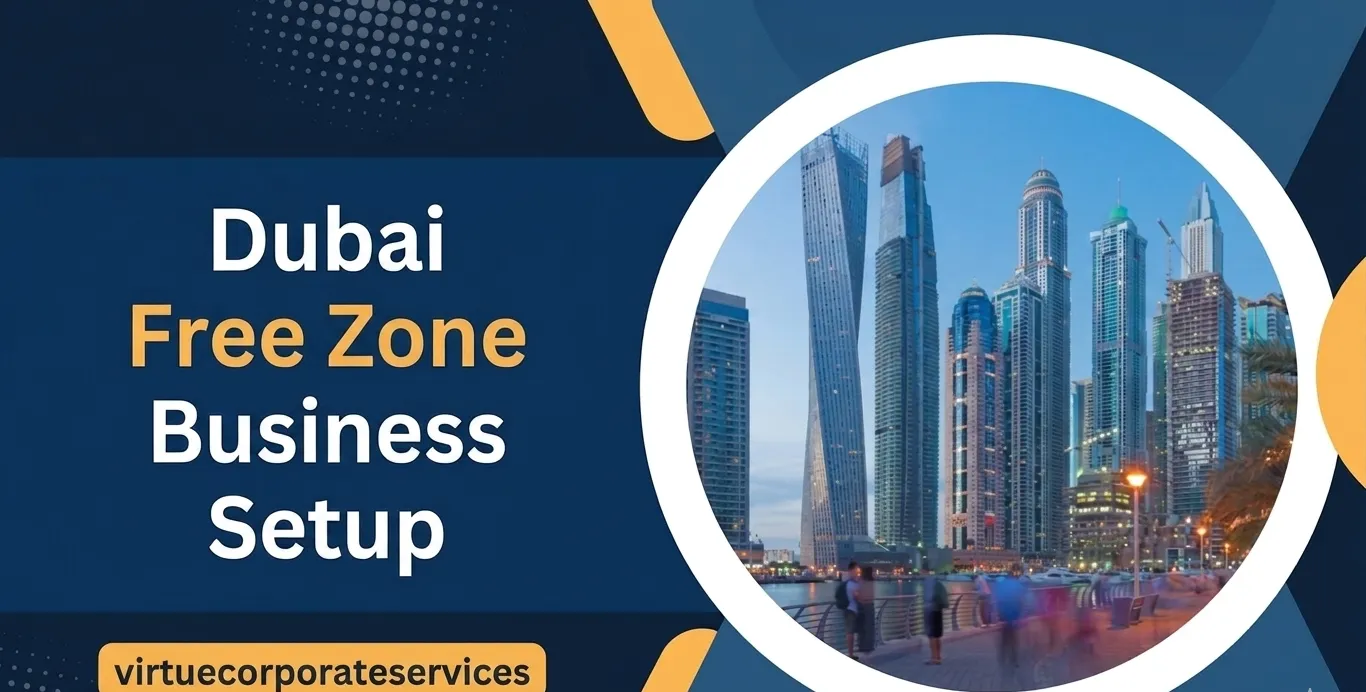
Ready to Set Up? Here Is What Your Next Step Looks Like.
You do not need to navigate the process alone.
Virtue Corporate Services specialises in Dubai Free Zone business setup for entrepreneurs, investors, and growing businesses from India and around the world. The team helps clients choose a suitable Free Zone, prepare documents, secure a license, and build the banking and compliance foundation needed for their business.
From your first question to your final license, Virtue Corporate Services can help you structure your company formation in Dubai Free Zone and complete the required steps efficiently.
Because the right setup today creates the freedom to grow tomorrow.
Call: +971 501152351
E-Mail: info@virtuebizsetup.ae
Address: Suite 303, Saeed Tower 2, Sheikh Zayed Road, Dubai, United Arab Emirates