Job Seeker Visa: Requirements, Process, Eligibility, and Application Guide
Finding a job abroad can open the door to better career opportunities, international experience, and long-term professional growth. But getting hired from another country isn’t always simple. Employers may prefer candidates who are already in the country, available for interviews, or familiar with the local job market.
That’s where a job seeker visa can make a major difference.
Instead of waiting for an employer to sponsor you before traveling, some countries allow eligible foreign professionals to enter for a limited period and look for suitable employment. You can attend interviews, meet recruiters, explore companies, and search for opportunities while you’re legally present in the country.
However, there’s an important detail many applicants overlook: not every country offers the same type of job-search visa. Eligibility rules, permitted activities, qualification requirements, application procedures, and the time allowed for finding work can vary significantly.
This guide explains how the process generally works, what you may need, how to prepare, common mistakes to avoid, and what you should do after receiving approval.
What Is a Job Seeker Visa?
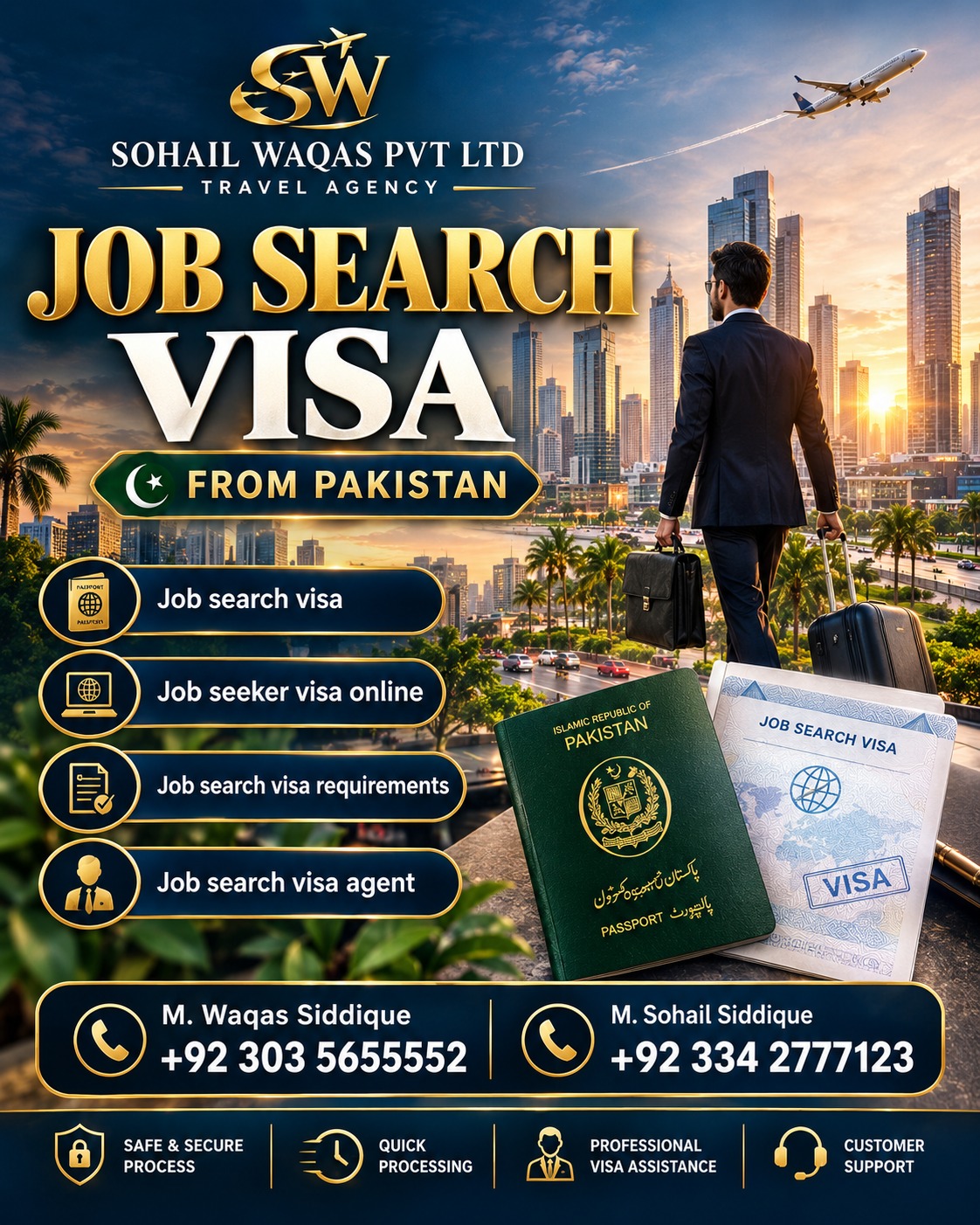
A job seeker visa is a temporary immigration route that allows eligible foreign nationals to enter a country specifically to search for employment.

Unlike a traditional work visa, you usually don’t need to have a confirmed employment contract before applying. The purpose is to give qualified candidates an opportunity to search for employment while physically present in the destination country.
Think of it as a bridge between being a qualified job candidate and getting a formal employment-based residence or work permit.
For example, imagine you’re a qualified IT professional living in Pakistan. You find several suitable companies abroad, but employers aren’t responding to applications from overseas. If the destination country offers an appropriate job-search route and you meet its conditions, entering the country legally to attend interviews could make the process more practical.
Once you find an eligible job, you may then need to change your immigration status or apply for the appropriate work or residence permit.
Why Do People Apply for a Job Seeker Visa?
Searching for international employment from your home country can be challenging. Recruiters may receive hundreds of applications, and candidates located overseas sometimes face additional barriers.
A job-search visa can provide several advantages.
1. You Can Search While You’re There
Being physically present can make it easier to attend interviews, career fairs, recruitment events, and meetings with employers.
Instead of scheduling every interaction remotely, you may be able to meet potential employers face to face.
2. It Can Improve Your Job Search
Some industries rely heavily on networking and personal meetings. A candidate who can attend an interview within a few days may be more convenient for an employer than someone who needs weeks to arrange international travel.
3. You Can Learn the Local Market
Working abroad isn’t just about finding any job. You need to understand which companies are hiring, what qualifications employers expect, and which skills are in demand.
Being in the country can help you learn these things firsthand.
4. You May Have More Interview Opportunities
Once you’re legally present under an appropriate immigration status, attending local interviews can become easier.
You can also respond quickly when a company asks you to attend an assessment or meeting.
5. It Can Support a Longer-Term Career Plan
For some applicants, the job-search period is the first stage of a broader international career plan.
After securing eligible employment, the applicant may qualify for a work permit, employment residence permit, skilled-worker route, or another immigration category, depending on the destination country’s rules.
Who Can Apply?
Eligibility depends entirely on the country and visa category.
Still, many job-search immigration programs are designed for people with a combination of education, professional skills, work experience, or other qualifications that make them attractive to the local labor market.
Typical eligibility factors may include:
-
A recognized educational qualification
-
Relevant professional experience
-
Skills in an occupation or sector accepted by the destination country
-
Proof of sufficient funds for the permitted stay
-
Valid passport
-
Health insurance where required
-
Clean immigration history
-
Proof of accommodation or intended stay where required
-
Language ability in certain programs
-
A genuine intention to search for qualifying employment
Not every applicant needs every item listed above. That’s why you should always check the exact rules of the specific immigration program before preparing an application.
Educational Qualifications Matter
Education is often one of the most important factors in skilled migration and job-search programs.
A university degree may be required in some routes, while another program could recognize vocational training, professional certifications, or specific technical qualifications.
Your qualification may also need to be:
-
Recognized by the relevant authority
-
From an accredited institution
-
Relevant to your professional field
-
Supported by official documentation
-
Translated if documents aren’t accepted in the destination country’s official language
Don’t assume that having a degree automatically makes you eligible.
The level, subject, institution, recognition status, and relationship between your education and your intended profession can all matter.
Work Experience Can Strengthen Your Profile
Professional experience can be especially valuable when you’re applying for a skilled employment route.
Suppose two candidates have similar educational backgrounds. One has no professional experience, while the other has several years of relevant industry experience, strong references, and a proven record of professional work.
The second candidate may have a stronger overall profile, depending on the country’s eligibility system.
Prepare evidence such as:
-
Employment letters
-
Experience certificates
-
Job descriptions
-
Professional references
-
Previous contracts where appropriate
-
Relevant certifications
-
Portfolio or project records for suitable professions
Make sure your documents tell a consistent story.
If your CV says you’ve worked as a software engineer for four years but your experience documents show something completely different, questions can arise during the assessment.
Financial Requirements
A major part of many temporary immigration applications is demonstrating that you can support yourself while searching for employment.
The purpose isn’t necessarily to show wealth. It’s usually to demonstrate that you won’t be financially dependent on unauthorized employment or public assistance during your stay.
Depending on the country, evidence may include:
-
Bank statements
-
A recognized financial guarantee
-
Sponsorship evidence where permitted
-
Other approved proof of funds
The exact financial requirement varies by immigration program and can change over time.
Don’t rely on screenshots or informal explanations when official financial evidence is required. Use documents that clearly demonstrate the source and availability of your funds.
Documents You May Need
Preparing documents early can prevent delays.
A typical application package may include:
| Document | Why It May Be Required |
|---|---|
| Valid passport | Confirms identity and travel eligibility |
| Application form | Provides official applicant information |
| Recent photographs | Identity verification |
| Educational certificates | Demonstrates academic qualifications |
| Experience letters | Supports professional background |
| CV or resume | Shows career history and skills |
| Proof of funds | Demonstrates financial ability |
| Health insurance | May be required for the stay |
| Accommodation evidence | May establish intended residence |
| Language certificate | Required by some programs |
| Motivation or cover letter | Explains your employment plan |
| Supporting documents | Helps verify eligibility |
This is a general guide rather than a universal checklist. The actual document list depends on the destination country and your personal circumstances.
Step-by-Step Job Seeker Visa Process
The process can seem complicated when you look at it all at once. Breaking it into stages makes it easier.
Step 1: Check Eligibility
Start by determining whether you qualify for the specific job-search immigration program.
Look at your:
-
Age
-
Education
-
Professional experience
-
Occupation
-
Language skills
-
Financial situation
-
Nationality
-
Travel history
-
Intended employment sector
Don’t start collecting dozens of documents before confirming that the basic eligibility conditions are satisfied.
Step 2: Identify Suitable Job Opportunities
Research the local employment market before applying.
Look at companies that hire people with your background. Study job descriptions and identify recurring requirements.
For example, if you’re a mechanical engineer, don’t simply search for “engineer jobs.” Examine actual vacancies and see whether employers commonly request CAD experience, project management skills, specific certifications, or industry experience.
This research can also help you identify gaps in your profile.
Step 3: Prepare Your CV
Your CV should be designed for the destination country’s employment market.
A strong international CV should clearly show:
-
Professional title
-
Key skills
-
Work experience
-
Education
-
Certifications
-
Relevant achievements
-
Language abilities
-
Contact information
Avoid filling your CV with irrelevant details.
A recruiter should be able to understand your professional value within a few seconds.
Step 4: Organize Your Documents
Create a document folder before submitting the application.
Keep digital copies of your:
-
Passport
-
Academic records
-
Employment evidence
-
Professional certificates
-
CV
-
Financial documents
-
Insurance documents
-
Photographs
-
Translations, if required
Use clear filenames and make sure scanned documents are readable.
Step 5: Prepare the Application
Complete the official application carefully.
Small mistakes can create unnecessary problems. Check names, passport numbers, dates, addresses, employment history, and education details before submission.
Your information should be consistent across every document.
Step 6: Submit Supporting Evidence
Provide documents in the format requested by the relevant authority.
If certified copies, official translations, biometric information, or specific document formats are required, follow those instructions exactly.
Don’t assume that a normal photocopy is enough.
Step 7: Attend an Appointment or Interview if Required
Some applicants may need to attend a visa application center, consulate, embassy, or another authorized location.
You may be asked questions about:
-
Your education
-
Your career
-
Your employment plans
-
Why you’re visiting
-
Your intended destination
-
Your financial situation
-
Your future plans
Answer honestly and keep your responses consistent with your application.
Step 8: Wait for the Decision
Processing times vary by country, application volume, individual circumstances, and document completeness.
Avoid making major travel commitments until you’re confident about the status of your application and have received the required approval.
What Should You Do After Approval?
Getting the visa isn’t the finish line. It’s the beginning of the actual job search.
Before traveling, prepare a realistic employment strategy.
Research Companies Before You Arrive
Create a list of target employers.
Divide them into categories:
-
Companies where your profile is a strong match
-
Companies where you’re a reasonable match
-
Companies you’d like to approach through networking
This prevents random job hunting.
Apply Before Traveling
If the visa allows you to search for work after arrival, that doesn’t mean you should wait until you land.
Start applying before departure.
By the time you arrive, you may already have:
-
Recruiter conversations
-
Online interviews
-
Interview appointments
-
Networking contacts
-
Application follow-ups
That can make your limited job-search period much more productive.
Build a Local Network
Networking is one of the most overlooked parts of an international job search.
Connect with:
-
Industry professionals
-
Recruiters
-
Former classmates
-
Professional associations
-
Career consultants
-
Employees at target companies
A simple professional conversation can sometimes lead to an opportunity that never appears on a public job board.
Can You Work Immediately?
This is one of the most important questions applicants ask.
Don’t assume that a job-search visa automatically gives you unrestricted permission to work.
Different immigration categories have different rules.
Some may allow limited employment under specific conditions. Others may permit only job searching, interviews, networking, or similar activities until you receive another authorization.
Before starting any paid employment, confirm that your immigration status legally allows it.
Working without the required authorization can create serious immigration problems.
What Happens After You Find a Job?
Finding an employer doesn’t automatically mean you can start working immediately.
You may need to obtain a separate work authorization or change to an employment-based immigration status.
The next stage may involve:
-
Employment contract
-
Employer documentation
-
Qualification verification
-
Salary or occupation requirements
-
Work permit application
-
Residence permit application
-
Registration with local authorities
The correct process depends on the destination country and the specific job.
This is why your employment strategy should consider immigration requirements from the beginning.
Common Mistakes Applicants Make
Even a qualified applicant can weaken an application through avoidable mistakes.
Mistake 1: Choosing a Country Without Research
Don’t choose a destination simply because you heard that “jobs are available there.”
Look at whether your profession is actually in demand and whether you meet the immigration requirements.
Mistake 2: Using an Unfocused CV
Sending the same generic CV to every employer rarely works well.
Adapt your CV to the role you’re targeting.
Mistake 3: Inconsistent Information
Your CV, application form, employment letters, and interview answers should tell the same story.
Conflicting dates or job titles can raise concerns.
Mistake 4: Ignoring Language Skills
Even when language isn’t formally required for the visa, it may be essential for employment.
A candidate who has strong technical skills but can’t communicate effectively with coworkers may struggle to secure a suitable role.
Mistake 5: Waiting Until Arrival to Start Searching
This wastes valuable time.
Research employers and submit applications before you travel whenever possible.
Mistake 6: Assuming Every Job Is Acceptable
Some immigration programs require employment that meets specific conditions.
A random part-time job may not qualify you for the next immigration stage.
Mistake 7: Depending on Verbal Promises
Be careful when someone promises guaranteed employment or guaranteed visa approval.
Legitimate immigration processes depend on official eligibility requirements and supporting evidence.
How to Improve Your Chances of Finding Employment
A visa can give you an opportunity, but your preparation determines how effectively you use it.
Improve Your LinkedIn Profile
Your online professional profile should match your CV.
Use a clear professional headline and explain your strongest skills in simple language.
Create a Strong Cover Letter
A good cover letter shouldn’t repeat your CV word for word.
Instead, explain why your background fits the particular role.
Prepare for Interviews
Research common interview questions in your profession.
Practice explaining:
-
What you do
-
What you’ve achieved
-
Why you’re interested in the company
-
Why you’re relocating
-
What value you can bring
Don’t memorize every sentence. Understand your story.
Prepare a Professional Portfolio
For suitable careers, a portfolio can make a major difference.
Designers, developers, architects, marketers, writers, engineers, and other professionals may benefit from showing real examples of their work.
Be Flexible Without Losing Focus
You may not find your ideal position immediately.
Consider related roles that match your qualifications and provide a realistic path into the local market.
But don’t accept a role that violates the conditions of your immigration status.
Job Seeker Visa vs Work Visa
These two routes are often confused.
| Feature | Job Search Route | Work Visa |
|---|---|---|
| Job offer before application | Often not required | Usually required |
| Main purpose | Search for employment | Work for an approved employer |
| Employment rights | Depends on specific rules | Usually defined by permit |
| Duration | Temporary and limited | Based on employment/permit |
| Main challenge | Finding a qualifying job | Securing an eligible offer |
| Next step | Employment authorization | Continued legal employment |
The biggest difference is simple: a work visa is generally connected to an existing job, while a job-search route is designed to help eligible candidates find employment first.
When Is This Route a Good Option?
This pathway may make sense if you’re:
-
A qualified professional
-
Actively seeking international employment
-
Unable to secure interviews easily from abroad
-
Financially prepared for a temporary job search
-
Willing to network and attend interviews
-
Interested in building a long-term international career
It may not be suitable if you don’t meet the educational or professional criteria, can’t support yourself during the search period, or have no realistic employment plan.
Practical Tips Before You Apply
Before submitting your application, take a step back and review the entire plan.
Ask yourself:
-
Does my education match the program?
-
Is my work experience relevant?
-
Is my profession in demand?
-
Do I have strong evidence of my qualifications?
-
Is my CV suitable for the target market?
-
Can I demonstrate sufficient funds?
-
Do I understand the permitted activities?
-
Have I researched potential employers?
-
Is my documentation complete?
-
Do my application details match my supporting documents?
If you can answer these questions confidently, you’re in a much stronger position.
Why Professional Visa Assistance Can Help
Immigration applications involve more than filling out a form.
The difficult part is often understanding which documents matter, how to organize evidence, and whether your profile fits the relevant immigration route.
Professional assistance can help you:
-
Review your basic eligibility
-
Identify documentation requirements
-
Organize supporting documents
-
Check application information
-
Highlight potential gaps
-
Prepare for the application process
-
Understand the next steps after approval
That doesn’t mean anyone can guarantee a visa. No legitimate professional can promise approval when the final decision belongs to the relevant immigration authority.
What good assistance should provide is clear guidance, careful preparation, and an honest assessment of your case.
Final Checklist
Before moving forward, use this quick checklist:
Personal documents
-
Valid passport
-
Required photographs
-
Correct personal information
Professional documents
-
Updated CV
-
Educational certificates
-
Employment evidence
-
Professional certifications
Financial documents
-
Required proof of funds
-
Supporting financial evidence
Application preparation
-
Correct forms
-
Required translations
-
Insurance where applicable
-
Accommodation evidence where required
-
Consistent information
Job-search preparation
-
Target employer list
-
Updated professional profile
-
Customized applications
-
Interview preparation
-
Networking strategy
A little preparation before submitting your application can save a lot of stress later.
Final Thoughts
A job seeker visa can be a useful pathway for qualified professionals who want to explore employment opportunities abroad without having a confirmed job before traveling. But getting the visa is only one part of the journey.
Your real success depends on preparation.
You need the right qualifications, accurate documentation, a strong CV, a realistic job-search strategy, and a clear understanding of what your immigration status allows you to do.
In my experience, applicants often focus too heavily on the visa itself and not enough on what happens after approval. That’s a mistake. Your employment plan should start before you submit the application.
If you’re considering this route from Pakistan, take the time to review your qualifications, professional experience, target industry, documents, and destination-country requirements before taking the next step.
Ready to explore your options? Contact SOHAIL WAQAS PVT LTD TRAVEL AGENCY for professional visa assistance and guidance with your application process.
FAQ Section
What is a job seeker visa and how does it work?
A job-search visa is a temporary immigration route that may allow eligible foreign nationals to enter a country and look for employment. The exact conditions, duration, eligibility criteria, and permitted activities depend on the destination country.
Can I apply for a job seeker visa from Pakistan?
Potentially, yes. Pakistani citizens may be able to apply for certain job-search immigration programs if they meet the specific eligibility requirements of the destination country. Requirements vary, so your qualifications and documents should be reviewed before applying.
Can I work while on a job seeker visa?
Not necessarily. Some programs may allow limited work under specific conditions, while others may restrict employment until another permit is approved. Always confirm the employment rights attached to your specific immigration status before starting work.
What documents are required for a job seeker visa?
Requirements vary, but applicants may need a valid passport, educational certificates, professional experience evidence, CV, proof of funds, photographs, insurance, accommodation evidence, and other supporting documents.
What should I do after finding a job?
After receiving a suitable job offer, you may need to apply for a work permit, employment residence status, or another appropriate immigration category. The correct process depends on the destination country and the terms of your employment.
How can I improve my chances of finding a job abroad?
Start preparing before traveling. Research employers, customize your CV, build professional connections, improve relevant language skills, prepare for interviews, and make sure the jobs you target are compatible with your qualifications and future immigration requirements.
https://sohailwaqas.com/job-seeker-visa-requirements-process-and-tips/
Contact Details
M. Waqas Siddique: +92 303 5655552
M. Sohail Siddique: +92 334 2777123
Related Reading: Air Ticket Booking: Easy Guide to Flights And Travel