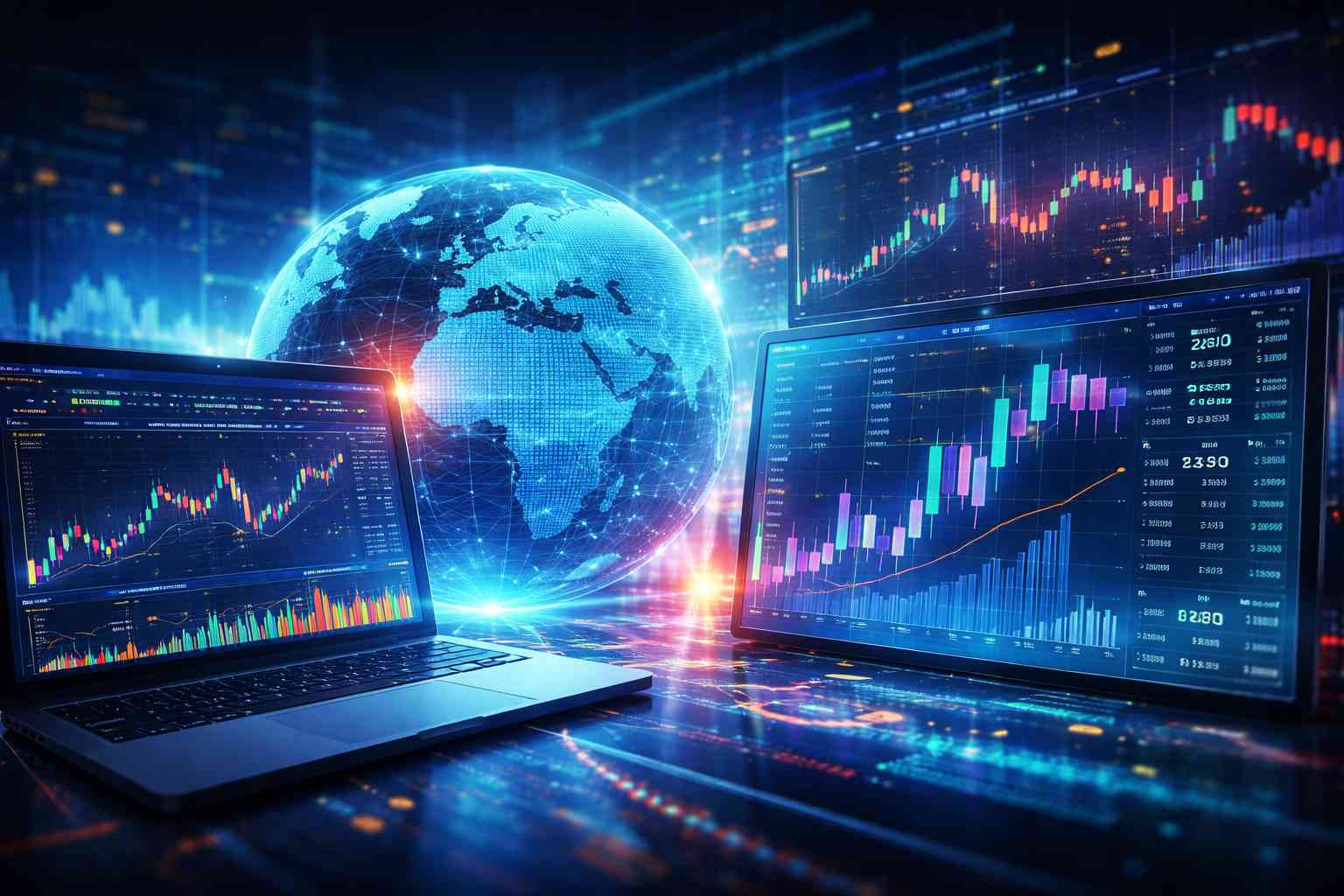
The foreign exchange market is the largest and most liquid financial market in the world, processing trillions of dollars in transactions every day. Because of its global nature and constant activity, forex data has become a foundational element for many modern digital products — far beyond traditional trading platforms.
Today, fintech applications, analytics systems, risk engines, and educational tools all depend on accurate and timely currency data. Instead of building and maintaining complex data pipelines internally, many development teams rely on specialized data platforms that provide structured access to forex markets, such as https://finage.co.uk/product/forex.
The Technical Complexity of Forex Data
From a technical standpoint, forex data presents unique challenges:
continuous 24/5 market activity across regions,


rapid price fluctuations influenced by macroeconomic events,


multiple currency pairs with different liquidity profiles,


the need for precise timestamps and synchronization,


historical depth for backtesting and analysis.
Handling these factors requires reliable infrastructure capable of aggregating, normalizing, and delivering data consistently under high load. Without such infrastructure, applications risk latency issues, inconsistent pricing, or incomplete historical records.
How Forex Data Is Used in Modern Applications
Forex data is integrated into a wide range of software systems, including:
Financial Dashboards and Analytics Platforms
Real-time exchange rates power dashboards that monitor currency movements, calculate conversions, and visualize trends across regions.
Risk Management and Exposure Monitoring
Businesses operating internationally use forex data to assess currency exposure, simulate scenarios, and manage financial risk tied to exchange rate fluctuations.
Automation and Alert Systems
Applications can trigger alerts or workflows when currency prices cross predefined thresholds, enabling proactive responses to market movements.
Educational and Research Tools
Universities and research teams rely on historical forex datasets to study macroeconomic relationships, market efficiency, and currency correlations.
AI and Machine Learning Workflows
Forex time-series data is often used to train predictive models, test hypotheses, and explore pattern recognition in financial markets.
API-Based Delivery as an Industry Standard
Modern forex data platforms typically deliver information through APIs that return structured responses in formats like JSON or CSV. This approach aligns well with contemporary software architectures, including microservices, cloud-native systems, and serverless applications.
API-based access allows teams to:
integrate forex data quickly,


scale usage as demand grows,


decouple data ingestion from business logic,


maintain cleaner and more maintainable codebases.
As a result, developers can focus on building features rather than managing raw data feeds.
Reliability and Scalability Considerations
When forex data becomes part of a production system, reliability is non-negotiable. Applications must handle peak market activity, sudden volatility, and high request volumes without degradation.
By relying on an external data platform built specifically for market data, teams reduce operational risk and gain access to infrastructure designed for stability, performance, and scalability.
Conclusion
Forex market data plays a central role in the modern financial technology ecosystem. Whether used for analytics, automation, education, or research, access to accurate and well-structured currency data enables smarter systems and more informed decision-making.
Using dedicated platforms that provide consistent access to forex data, such as https://finage.co.uk/product/forex, allows organizations to build reliable, scalable applications without the burden of maintaining complex data infrastructure. As data-driven architectures continue to dominate fintech development, forex data will remain a critical building block for innovation.