The corporate workspace has undergone a profound transformation over the past decade, and nowhere is that evolution more visible or more consequential than in Abu Dhabi. A city that has grown from a largely oil-dependent economy into a diversified, internationally connected business hub has seen the expectations and requirements of its commercial occupiers change fundamentally, driving a corresponding shift in how developers, landlords, and workspace operators think about what commercial space should deliver.
Understanding the forces shaping the evolution of Abu Dhabi commercial real estate requires looking beyond the physical attributes of individual buildings to examine the broader changes in how businesses operate, how employees work, and how the built environment can either support or constrain the ambitions of the organisations that occupy it.
From Conventional Office to Experience-Led Environment
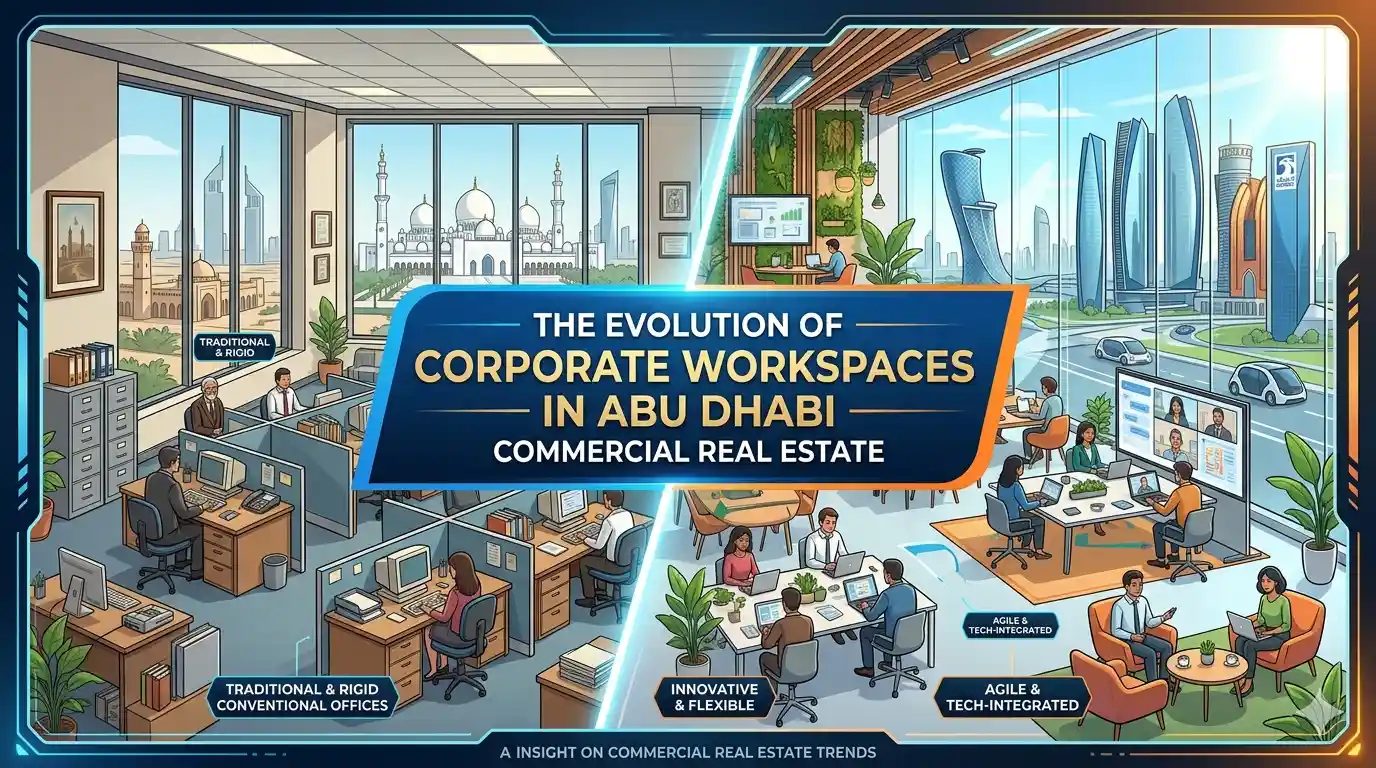
The traditional corporate office, characterised by fixed desks, cellular private offices, and a predominantly functional approach to workspace design, has given way to a far more varied and intentional conception of what a working environment should be. Occupiers in Abu Dhabi’s most competitive commercial districts are increasingly seeking spaces that support a range of working modes, from focused individual work and confidential meetings to collaborative project spaces, informal social areas, and facilities that support the wellbeing of employees throughout the working day.
This shift reflects a broader recognition among employers that the physical workspace is a meaningful tool for attracting and retaining talent in a competitive labour market. A well-designed, amenity-rich office communicates to current and prospective employees that the organisation values their experience at work, and in a city where international professionals have genuine choices about where to base their careers, that signal carries real weight in hiring and retention decisions.
Technology as a Driver of Spatial Change
The acceleration of digital transformation across virtually every sector has reshaped the spatial requirements of corporate occupiers in ways that are still working their way through the market. Businesses that have invested heavily in cloud infrastructure, digital collaboration platforms, and mobile working capabilities require less dedicated desk space per employee than their predecessors but more investment in the connectivity, audio-visual infrastructure, and smart building systems that make their technology-dependent operations function seamlessly.
Abu Dhabi’s most forward-thinking commercial developments are responding to this reality by treating technology infrastructure as a core component of the building proposition rather than a supplementary feature. High-capacity fibre connectivity, sophisticated access control systems, advanced energy management platforms, and tenant experience applications that allow occupiers to manage their space and services digitally are all becoming standard expectations in Grade A commercial buildings that aim to remain competitive over a meaningful investment horizon.

Wellness and the Humanisation of the Workspace
The growing emphasis on employee wellbeing has introduced a range of considerations into corporate workspace design that would have seemed peripheral to most occupiers a generation ago. Natural light, air quality, acoustic performance, access to outdoor spaces, fitness facilities, and the availability of healthy food options within or immediately adjacent to the workspace are all factors that feature actively in the briefs that sophisticated occupiers bring to lease negotiations in Abu Dhabi today.
Developers who have integrated these considerations into the design and programming of their commercial schemes are finding that the investment is clearly rewarded in occupier demand and the quality of the tenant relationships they are able to build. Buildings that perform well on wellness metrics attract occupiers who are themselves committed to high standards of employee experience, creating a virtuous cycle in which asset quality and tenant quality reinforce each other over time.
Mixed-Use Integration and the End of the Standalone Office
The standalone office building, isolated from retail, hospitality, and residential activity, is increasingly out of step with how occupiers and their employees want to experience the working day. The integration of commercial space within broader mixed-use developments has become a defining feature of Abu Dhabi’s most successful new commercial districts, creating environments where work, dining, leisure, and community activity coexist within a walkable, activated public realm.
This integration benefits occupiers by providing their employees with a richer and more convenient daily experience. It benefits developers and investors by creating schemes whose appeal extends beyond the purely functional, generating footfall, activity, and a sense of place that supports both the commercial and the ancillary components of the development over the long term.
The Influence of Global Occupier Standards
Abu Dhabi’s growing success in attracting international financial institutions, professional services firms, and technology companies has introduced a globally informed set of workspace expectations into the local market. These occupiers arrive with established standards shaped by their experience of commercial real estate in London, New York, Singapore, and other leading markets, and they expect their Abu Dhabi workspace to meet those standards rather than requiring them to compromise.
This internationalisation of occupier expectations has raised the bar for the entire market, accelerating the improvement of commercial stock and the sophistication of landlord and developer responses to changing demand. The long-term effect is a commercial real estate market that is better equipped to compete for global occupier interest and more resilient to the competitive pressures that will inevitably intensify as the region’s business environment continues to mature.
Looking Forward
The evolution of corporate workspaces in Abu Dhabi is far from complete. The forces driving change, including technological advancement, shifting workforce expectations, sustainability imperatives, and the ongoing diversification of the emirate’s economy, will continue to reshape what occupiers require and what landlords must provide to remain competitive. The commercial real estate market that emerges from this ongoing transformation will be more sophisticated, more internationally competitive, and more closely aligned with the needs of a diverse and ambitious business community than at any previous point in Abu Dhabi’s remarkable commercial development story.
Related Reading: Real Estate, Hospitality & Events: Niche Uses of Video Production in Dubai’s Key Sectors
Related Reading: First Time Investor Friendly Developers in UAE: Entry Level Options 2026
Related Reading: What Makes Sobha South a Prime Choice for Homebuyers?